Eco-friendly concrete and landscaping: myth and truth about Ponta dos Molhes
 Rafael Gonçalves·October 09, 2026
Think of a symphony. Each instrument has its own role, melody, and rhythm. But the true magic happens when they all play in harmony, creating something greater than the sum of its parts. The same principle applies to construction and nature, especially when we talk about eco-friendly concrete and landscaping at Ponta dos Molhes, here in Torres.
For us at Haute Imobiliária, this harmony is a non-negotiable value. We understand that building in a place as special as Torres requires a serious commitment to sustainability and to integrating each project with its surroundings. That is why eco-friendly concrete and landscaping go far beyond a trend; they are a necessity and a responsibility. And, as with any topic that gains attention, many myths and some truths arise that need to be clarified. Let’s uncover what it really means to incorporate these concepts, with special consideration for the beauty and preservation of our beloved Ponta dos Molhes.
"Eco-friendly concrete is weak and doesn’t last as long as traditional concrete"
Myth. The idea that "eco-friendly" means "fragile" is one of the biggest misconceptions. In fact, eco-friendly concrete refers to a range of innovations designed to reduce the environmental impact of its production and use without compromising strength or durability. This may involve using recycled aggregates (such as crushed construction debris), partially replacing cement with pozzolanic materials (such as fly ash or silica fume, industrial byproducts that react with the lime in cement to increase strength and reduce porosity), or even using curing techniques that reduce water consumption.
In some cases, eco-friendly concrete may even offer advantages over traditional concrete, such as greater resistance to certain types of corrosion or improved thermal performance. The key lies in the engineering behind its formulation. A project that is well planned and executed with eco-friendly concrete can be just as robust—or even more so—than one built with conventional materials. For us, as people who value the longevity of developments in Torres, durability is a crucial factor, and today’s technology already makes it possible to combine sustainability with long-lasting performance.
"Landscaping is only for beautifying the property and has no real impact"
Myth and Truth. It is true that landscaping enhances a property’s beauty, but reducing its role to that alone overlooks a vast range of practical and environmental benefits. A well-designed landscaping project goes far beyond aesthetics. It can act as a natural temperature regulator, reducing the need for air conditioning on hot days and providing insulation during the winter, resulting in energy savings and greater thermal comfort.
Think of Ponta dos Molhes: the people who walk to the tip, enjoying views of the sea and cliffs, directly benefit from landscaping that integrates walkways with local vegetation, providing shade, reducing the effects of the wind, and even filtering the air. Developments with native landscaping, for example, contribute to local biodiversity by attracting birds and pollinating insects, while also helping drain rainwater and minimizing the risk of flooding.
In addition, landscaping has a direct impact on people’s health and well-being, creating spaces for recreation and contemplation that promote mental health. For a real-estate development, this translates into greater appreciation and appeal for future residents or investors. Strategically planned greenery enhances quality of life and the functionality of spaces, making them more pleasant and sustainable.
"Incorporating sustainability into construction greatly increases costs and makes the project unfeasible"
Myth. Although some sustainable technologies and materials may have a slightly higher initial cost, this perspective overlooks the return on investment in the medium and long term. Building sustainably often means lower maintenance costs, reduced energy and water consumption, and greater building durability.
Imagine a condominium in Torres that uses rainwater collection and reuse systems to irrigate the garden and clean common areas. Over the years, the savings on the monthly water bill offset the initial investment. The same applies to optimized natural lighting, the use of solar panels to heat water, and high-performance materials that reduce the need for frequent repairs and renovations.
In addition, property appreciation is an important factor. In an increasingly environmentally conscious market, properties with sustainability certifications or a demonstrated commitment to environmental responsibility tend to attract more interest and, consequently, command higher value. Therefore, what may seem like an additional cost at first can become savings and appreciation in the future—a calculation that we at Haute Imobiliária make a point of presenting to our clients.
"Any plant works for sustainable landscaping—as long as it’s green"
Myth. Sustainable landscaping requires much more careful planning than simply choosing "green" plants. The selection of species is essential and must take several factors into account, such as the local climate, soil type, sunlight exposure, and water availability.
In Torres, for example, the proximity to the ocean and the presence of strong winds are factors that must be considered. Choosing native species from the region is not merely an aesthetic decision, but a smart strategy. Native plants are naturally adapted to the environment, require less irrigation (reducing water consumption), need fewer fertilizers and pesticides, and are more resistant to local pests and diseases. They also contribute to maintaining the region’s biodiversity and ecological balance.
In addition, a good landscaping project considers functionality: where shade is most needed, where vegetation can serve as a windbreak, or where it can complement the building’s architecture. Choosing “the right plant for the right place” is a cornerstone of sustainable landscaping and a distinguishing feature that adds value while minimizing long-term maintenance costs.
"Modern architecture does not harmonize with ecological and landscaping elements"
Myth. On the contrary, modern architecture has found a rich source of inspiration and innovation in sustainability and landscaping. The integration of the built environment with nature is one of the major trends in contemporary architecture, aiming to create spaces that are aesthetically pleasing, functional, and ecologically responsible.
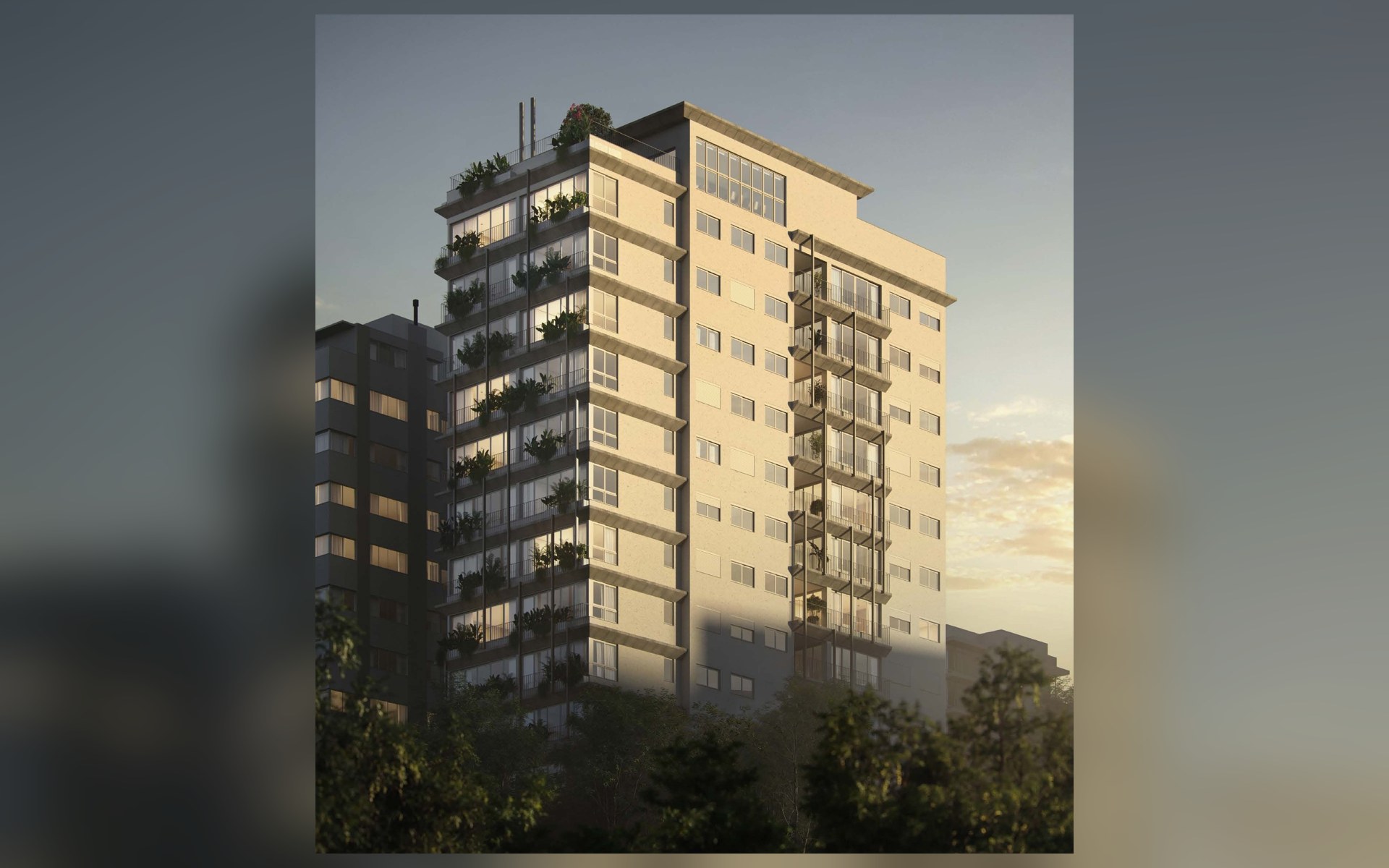
Buildings with green roofs, vegetated façades, indoor gardens, and maximized natural light and cross-ventilation are examples of how today’s architecture incorporates ecological elements without sacrificing aesthetics. This fusion not only improves occupants’ quality of life, but also raises the standard of projects, making them more attractive and valuable. The idea that “being modern” is synonymous with “being cold and artificial” is outdated. Today, modernity joins forces with nature to create innovative environments that respect their surroundings.
With its singular landscape, Ponta dos Molhes is a perfect example of how human intervention can coexist with—and even enhance—natural beauty. Rather than competing with the landscape, new projects can draw inspiration from the forms and colors of the local scenery, using materials that blend into their surroundings and creating a dialogue between the building and the ocean horizon. This is the vision that drives Haute Imobiliária in Torres: building with purpose, bringing together the best of architecture with an unwavering respect for the nature around us.
Understanding the true nature of eco-friendly concrete and landscaping is essential for anyone looking to invest in or live in Torres. Far from being passing fads or unnecessary expenses, they are pillars of intelligent and responsible construction—adding value, comfort, and, above all, respect for our environment. At Haute Imobiliária, our mission is to connect you with developments that not only make dreams come true, but also contribute to a more sustainable future in our city.
Worth reading: Making the Most of Space in Sustainable Compact Properties and Soundproofing: Invest in Peace and Quiet for Your Luxury Property in Torres.
Not sure what makes sense for you? See what’s currently available in Torres.